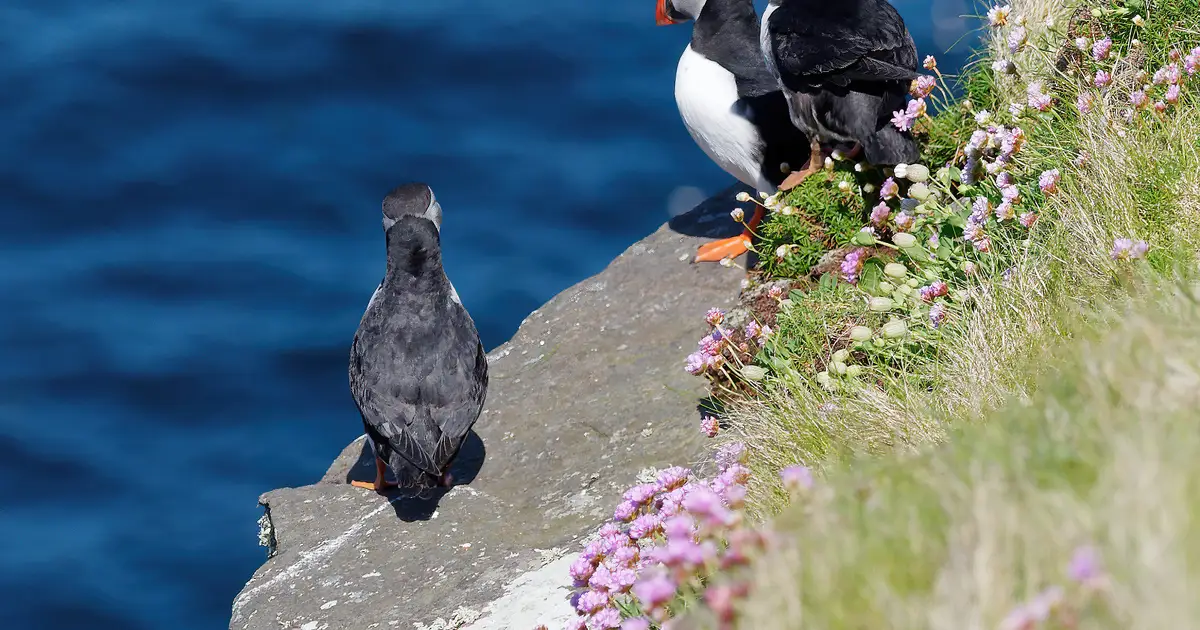

The safest weeks for puffins in the Highlands and Islands run from late May to mid-July. They are the overlap between the dates given for the three best-known places to see them: Handa in Sutherland, Lunga in the Treshnish Isles off Mull, and Sumburgh Head in Shetland. Outside the breeding season, the RSPB says puffins live far out at sea, often well away from land, so an autumn or winter trip will not find them.
The three places compared
| Site | Dates quoted | Getting there | Dogs |
|---|---|---|---|
| Handa, Sutherland | Puffins mid-May to July; ferry early April to late August or early September | Small on-demand boat from Tarbet, off the A894 north of Scourie | Not allowed |
| Lunga, Treshnish Isles | Over two hours ashore on most days from late April to the first week of August | Organised boat trip from Ulva Ferry on Mull, or joined from Oban | Not allowed on the operator's trips |
| Sumburgh Head, Shetland | Back in early April; most gone by mid-August | By road from Lerwick, or from Sumburgh Airport close by | Short lead, 1 April to 15 August |
All of these are dates as published when we checked, and boat operators can change them from year to year. Confirm with the operator before you book anything you cannot cancel.
Handa: the long way round
Handa is a Scottish Wildlife Trust reserve just off the north-west coast of Sutherland, and getting there is half of the experience. A pedestrian ferry, run independently of the Trust, crosses on demand from Tarbet. The Trust lists it from Monday to Saturday, 9.30am to 5pm, with the last boat out to the island at 1.30pm and nothing on Sundays. It may not run in bad weather, so a day in hand is a sensible precaution.
Set your expectations about what you are going for. Handa is known above all for guillemots, razorbills and great skuas, and it has one of the UK's largest guillemot colonies. Puffins are on the list of birds to look for, but not in the crowds you get on Lunga. If you go for the seabird city as a whole, you will not be disappointed.
The paths need a reasonable level of fitness and sturdy footwear, and the Trust says to pack warm waterproofs even in midsummer. Dogs cannot go on the island or the boat because of ground-nesting birds.
Lunga: closest to the birds
If you want to sit on the turf with puffins going about their day around you, this is the usual recommendation. Turus Mara, one of the operators sailing here, describes Lunga as one of the most accessible seabird colonies in Scotland. Its Treshnish Isles and Staffa trip leaves Ulva Ferry at 10.30am and is back at 4.45pm, with around two hours ashore on Lunga and about an hour on Staffa. You can also join from Oban, on an earlier start.
A few things to plan for. Ulva Ferry has no public transport, so you need a car, a lift or a taxi. Landings depend on the sea, and an exposed island can be off limits on the day. Combine this with the ferry from Oban to Craignure, and build a spare day into your stay on Mull if the trip is the main point of your holiday.
We have no connection with Turus Mara, and it is not the only boat. It is simply the operator whose details we checked for this guide.

Sumburgh Head: no boat required
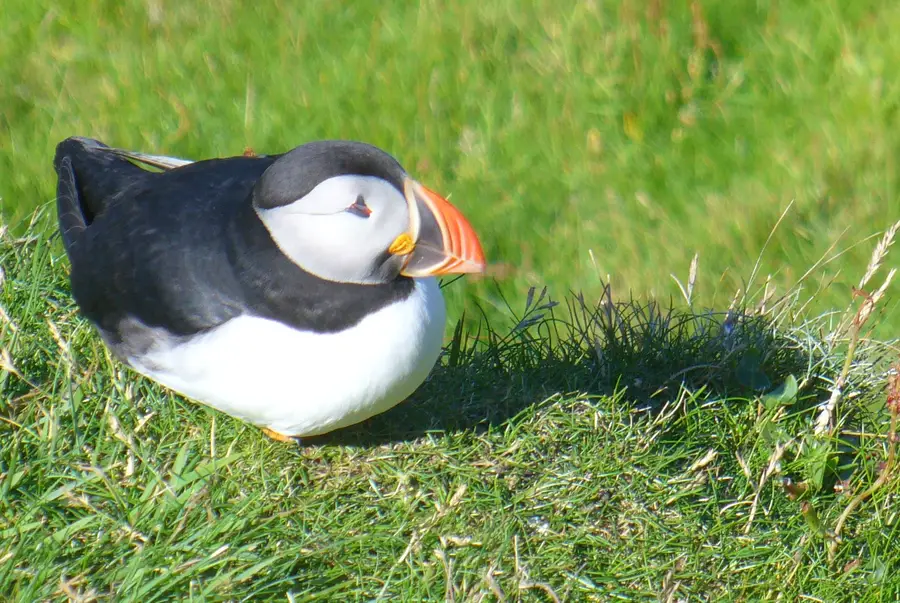
For anyone in Shetland, Sumburgh Head is the easy option. The RSPB reserve sits at the southern tip of the mainland, around the lighthouse, and the birds nest in burrows in the grassy cliff tops. The Shetland.org visitor site says puffins return in early April, about two to three weeks behind colonies further south, and that most have gone by mid-August, with numbers peaking in the second half of summer.
The RSPB's reserve page lists a ramped lookout about 50 metres south of the main car park, and Blue Badge spaces. The path up to the lighthouse is too steep for wheelchair users. Toilets by the café are open from April to September, during visitor centre hours only.
Other places worth a look
The RSPB also names Dunnet Head in Caithness, and in Orkney, North Hill on Papa Westray and Hoy. Dunnet Head can be reached by road, which suits a tour of the far north. These sites are less of a sure thing than Lunga, and you may need binoculars to do them justice. The cliff edges can also be undercut and dangerous, so please stay back from them and on the paths.
When exactly to go
Numbers build through spring and the birds leave quite suddenly in late summer. If you can only pick one fortnight, go for the second half of June. The islands are busy, but the birds are very active, and the long evenings give you plenty of light. For the midge-averse, an island or a sea cliff with a breeze is one of the better places to be at that time of year. Our midge guide has more on why.
The ferry guide covers booking if you want to link a seabird trip to a longer tour of the islands, and if you plan to sleep out near the coast, read our notes on wild camping first.
Giving them room
Puffins are on the UK's Red List. The RSPB's page says 23% of the UK's puffins have been lost in the past 20 years, according to Seabirds Count 2023, and that half of the UK population is found at only a few sites. They nest in burrows, which can collapse under your feet if you wander off the path. On Lunga, the birds can come remarkably close if you sit still. Let them do the approaching, stay out of their flight lines to the burrows, and do not stand between a bird carrying fish and its nest.
Checked against
We have no commercial link with any source named here. Spotted something out of date? Tell us at [email protected].