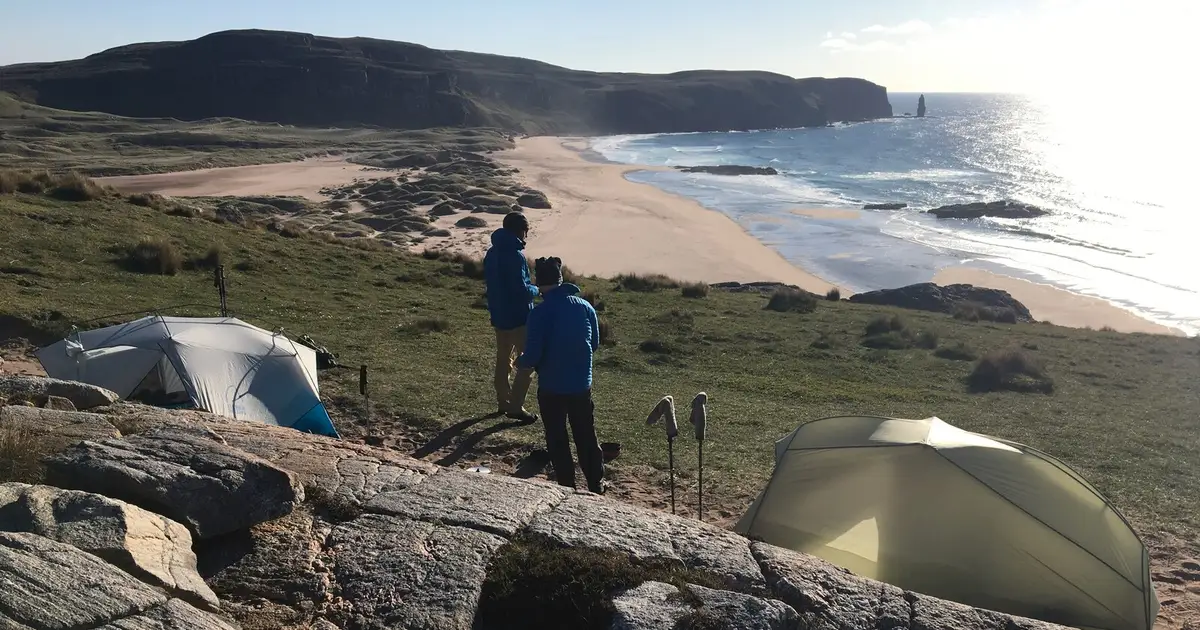

Yes. Wild camping is legal across most of Scotland. The Land Reform (Scotland) Act 2003 gives everyone a right of responsible access to most land and inland water, and the Scottish Outdoor Access Code treats lightweight camping as part of that right. You do not need to ask a landowner first, as long as you keep to the Code.
That word "responsible" carries the weight. The right is not a licence to pitch anywhere, and it does not stretch to a car, van or motorhome. It also has one large exception that catches out a lot of first-timers, on the shores of Loch Lomond.
What counts as wild camping under the Code
The Code describes a small, short and light kind of camping. Read it and you get a picture of a couple of tents on open ground that will show no sign of you by the following day. The main points are these.
- Small numbers. The Code gives no fixed figure, so use your judgement. A big group with a dozen tents is a different thing from two friends and a tent, and it will feel different to anyone living nearby.
- Two or three nights in one place. After that, move on.
- Well away from buildings and roads. Again there is no set distance. If you can see someone's kitchen window, you are too close.
- Not in enclosed fields of crops or farm animals.
- Take everything away, including litter that was there before you arrived, if you can manage it.
Access rights also leave out some land altogether, such as gardens and the ground around houses, school grounds and fields of growing crops. In practice, the open hill, the moor, the forest track and the remote shore are where this right comes into its own.
The exception: Loch Lomond and the Trossachs
This is the rule people most often miss. In parts of Loch Lomond & The Trossachs National Park, camping byelaws apply from March to September. Inside the Camping Management Zones during those months, you may camp only at a campsite or with a permit in a designated permit area. From October to February, the byelaws do not affect camping.
The zones cover less than 4% of the park, but they include many of the popular loch shores, so it is worth checking the park's map rather than guessing. When we looked, the park listed permits at £4.30 per tent or motorhome per night, and said that refusing to comply could mean a report to the Procurator Fiscal and a fine of up to £500. Check the current figures on the park's own page before you go.
This matters most to anyone walking the West Highland Way, because the route runs up the east side of Loch Lomond and through that country. Plan those nights before you leave home.

Fires, stoves and the ground under your tent
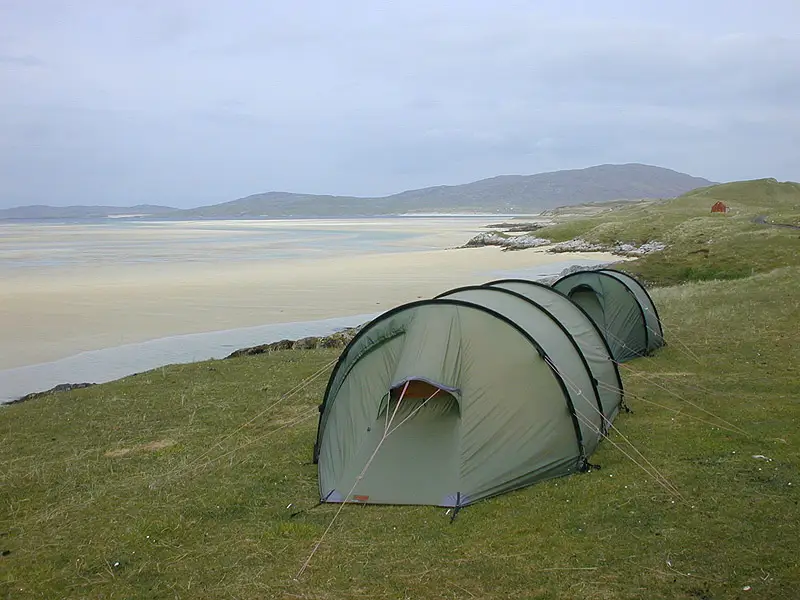
The Code prefers a stove. It asks you not to light open fires during periods of high fire risk, or near forests, farmland, peaty ground, buildings or historic sites. That rules out a lot of the Highlands, where the ground itself can burn and smoulder long after you think a fire is dead. Fire bowls and barbecues come under the same advice. Use your stove on a level surface that will not burn, and leave any deadwood where it lies, because it is habitat for something.
In the national park zones, the byelaws go further and treat collecting firewood as irresponsible fire-lighting, so anyone who does have a fire there needs to bring their own fuel.
If a fire gets out of control, call 999.
The toilet question
Nobody likes this bit, and it is the thing that spoils popular spots fastest. The Code asks you to urinate at least 30 metres from lochs, rivers and burns. For anything more, go well away from buildings, paths, open water and farm animals, then either bury it in a shallow hole and replace the turf, or bag it and carry it out. A small trowel and a few strong bags weigh next to nothing.
Times of year when you need to think harder
Access rights run all year, but what is happening on the land changes with the seasons.
Deer stalking. Since 2023, stalking of male deer can take place all year, and the busiest periods are the first three weeks of October and from late January to mid-February. The Heading for the Scottish Hills service shows where stalking is happening on Munros, Corbetts and other popular hills. Have a look before you settle on a route, and follow any reasonable request from a land manager to go a different way.
Summer insects. A still evening beside water in July is about as bad as it gets. Our guide to midges and ticks goes through how to choose a pitch that gets some breeze, and what to do about a tick bite.
Nesting birds. Keep away from cliff tops and rough ground where seabirds and waders are breeding in spring and early summer. If you are travelling for the puffin colonies, camp well clear of them, and note that some reserves and island boats have their own rules, including no dogs.
Parking and campervans
Access rights do not cover motor vehicles. If you drive to the start of a walk, you need to park legally and with some thought, without blocking a passing place, a field gate or a forest track. Sleeping in a van at the roadside is not wild camping, and the Code offers it no protection. Landowners may restrict parking, and the national park byelaws cover motorhomes and campervans in the zones as well as tents.
A quick check before you pitch
Most of the Code comes down to a few questions you can ask on the spot, with your pack still on your back.
- Am I in a Camping Management Zone, and is it between March and September?
- Is this ground open, rather than an enclosed field or someone's land next to a house?
- Can I see a building or a road from here, and can they see me?
- Is the turf tough enough to take a tent for a night, and will it recover?
- Where will I go to the toilet, and is that at least 30 metres from the water?
If the answers feel wrong, walk on for ten minutes. In the Highlands and Islands, there is usually a better spot just over the next rise.
This is a plain-English guide, not legal advice. The law and the Code are the final word, and the national park can change its permit arrangements from season to season.
Checked against
- Scottish Outdoor Access Code: camping
- Loch Lomond & The Trossachs National Park: camping byelaws
- Heading for the Scottish Hills: deer stalking information
We have no commercial link with any source named here. Spotted something out of date? Tell us at [email protected].